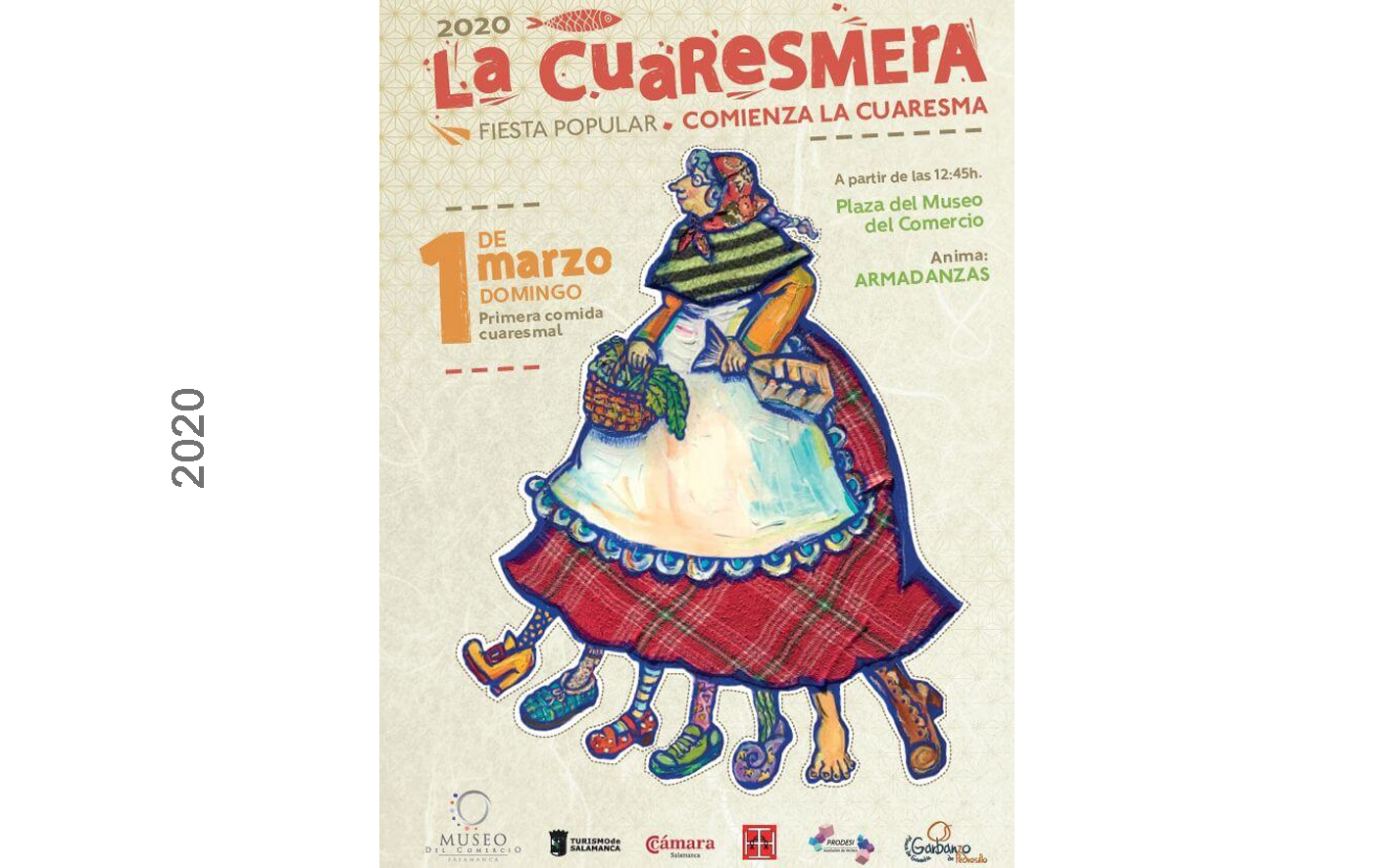
La Cuaresmera 2020
Lent – a forty-day period of fasting and abstinence from meat, preceding Easter and beginning on Ash Wednesday – is already documented in 13th-century French literature and in 14th-century Castile by Archpriest of Hita in El Libro del Buen Amor.
In the 17th century, the popular representation of Lent became widespread in Central Europe in the form of a Lenten calendar, which represents the seven weeks of Lent.
In Spain, this calendar is known as La Cuaresmera, of which multiple representations exist. It is personified in the figure of an old woman, made of wood or cardboard, who displays foods typical of the Lenten season, such as vegetables and fish. She has seven legs that represent the seven Lenten weeks, symbolizing the Lord's days of fasting in the desert. Numerous representations of her exist.
La Cuaresmera was traditionally hung in a house window on Ash Wednesday, and each Sunday of Lent, one leg would be torn off. On Easter Sunday, she was sawed or burned with the last remaining leg, and this day of rejoicing was celebrated with a succulent meal where meat, in the form of lamb, cured meats, or hornazo, made its reappearance.
La Cuaresmera was also displayed in the windows of shops and grocery stores to announce the sale of salted cod (bacalao en salazón), a staple during the Lenten vigil period, as it was the only fish that reached Castile – preserved in salt – and offered great variety in its preparation.